

Stone fireplace walls have been revered for centuries for their robust elegance and the distinct coziness they bring to living spaces.
Acting as a centerpiece within a room’s design, an interior stone fireplace offers a blend of tradition and sophistication that can elevate the overall ambiance.
The allure lies in their natural beauty and versatility, which allows for a comprehensive range of customization options.
From selecting the perfect color and shape to crafting intricate patterns, homeowners can shape their fireplace project into a unique statement piece that resonates with their stylistic preferences.
The durability and timeless nature of stone materials also contribute to their appeal. Whether in a grand living room design in North Bay or a quaint rustic living space elsewhere, the presence of a stone fireplace wall can enhance the atmosphere with its natural charm.
Moreover, the adaptability of stone fireplaces to different design themes cannot be overstated.
Whether the interior design leans towards a rustic fireplace aesthetic or a clean, contemporary look, stone fireplaces can be expertly tailored to complement any living space.
Types of Stone Fireplaces
Stone fireplaces come in a variety of styles and designs, each offering unique characteristics and benefits that can transform any living space. Here are some popular types of stone fireplaces to consider:
Natural Stone Fireplaces:
Crafted from genuine natural stone, these fireplaces exude authenticity and timeless beauty. Each piece of stone is unique, providing a one-of-a-kind look that adds character and elegance to any room. Natural stone fireplaces are known for their durability and ability to retain heat, making them both a practical and stylish choice.
Stone Veneer Fireplaces:
For those seeking the aesthetic appeal of natural stone without the hefty price tag, stone veneer fireplaces are an excellent alternative. Made from thin layers of stone attached to a backing material, stone veneer offers the same visual impact as natural stone but is lighter and easier to install. This cost-effective option is perfect for homeowners looking to enhance their living space without breaking the bank.
Stacked Stone Fireplaces:
Characterized by their layered, stacked appearance, these fireplaces bring a touch of rustic charm to any living space. The irregular shapes and textures of the stones create a visually interesting and dynamic focal point. Stacked stone fireplaces are ideal for those who appreciate a more rugged, natural look.
Modern Rustic Fireplaces:
Combining modern design elements with rustic stone, these fireplaces offer a unique blend of contemporary and traditional styles. The sleek lines and minimalist design of modern rustic fireplaces create a cozy yet sophisticated atmosphere, making them a versatile addition to any home.
Traditional Fireplaces:
Classic in design, traditional stone fireplaces feature timeless aesthetics that never go out of style. These fireplaces often incorporate elements like a mantel and hearth, providing a warm and inviting focal point in the living room. Traditional stone fireplaces are perfect for those who appreciate enduring elegance and comfort.
Stone Fireplace Surrounds
A stone fireplace surround is the area around the fireplace that is covered in stone, serving as both a protective barrier and a decorative element.
The choice of material for the surround can significantly impact the overall look and feel of the fireplace and the surrounding living space. Here are some popular types of stone fireplace surrounds:
Natural Stone Surrounds:
Made from genuine natural stone, these surrounds offer an authentic and unique look. The natural variations in color and texture add depth and character, making each surround a distinctive feature in the living space. Natural stone surrounds are durable and heat-resistant, ensuring they stand the test of time.
Stone Veneer Surrounds:
A cost-effective alternative to natural stone, stone veneer surrounds are made from thin layers of stone attached to a backing material. They provide the same visual appeal as natural stone but are lighter and easier to install. Stone veneer surrounds are perfect for homeowners looking to achieve a high-end look on a budget.
Brick Surrounds:
A classic choice, brick surrounds add a touch of warmth and coziness to any living space. The rich, earthy tones of brick create a welcoming atmosphere, making the fireplace a natural gathering spot. Brick surrounds are also highly durable and require minimal maintenance.
Stacked Stone Surrounds:
Characterized by their layered, stacked appearance, these surrounds bring a rustic charm to the living space. The irregular shapes and textures of the stones create a visually interesting and dynamic focal point. Stacked stone surrounds are ideal for those who appreciate a more rugged, natural look.
Floor-to-Ceiling Installations
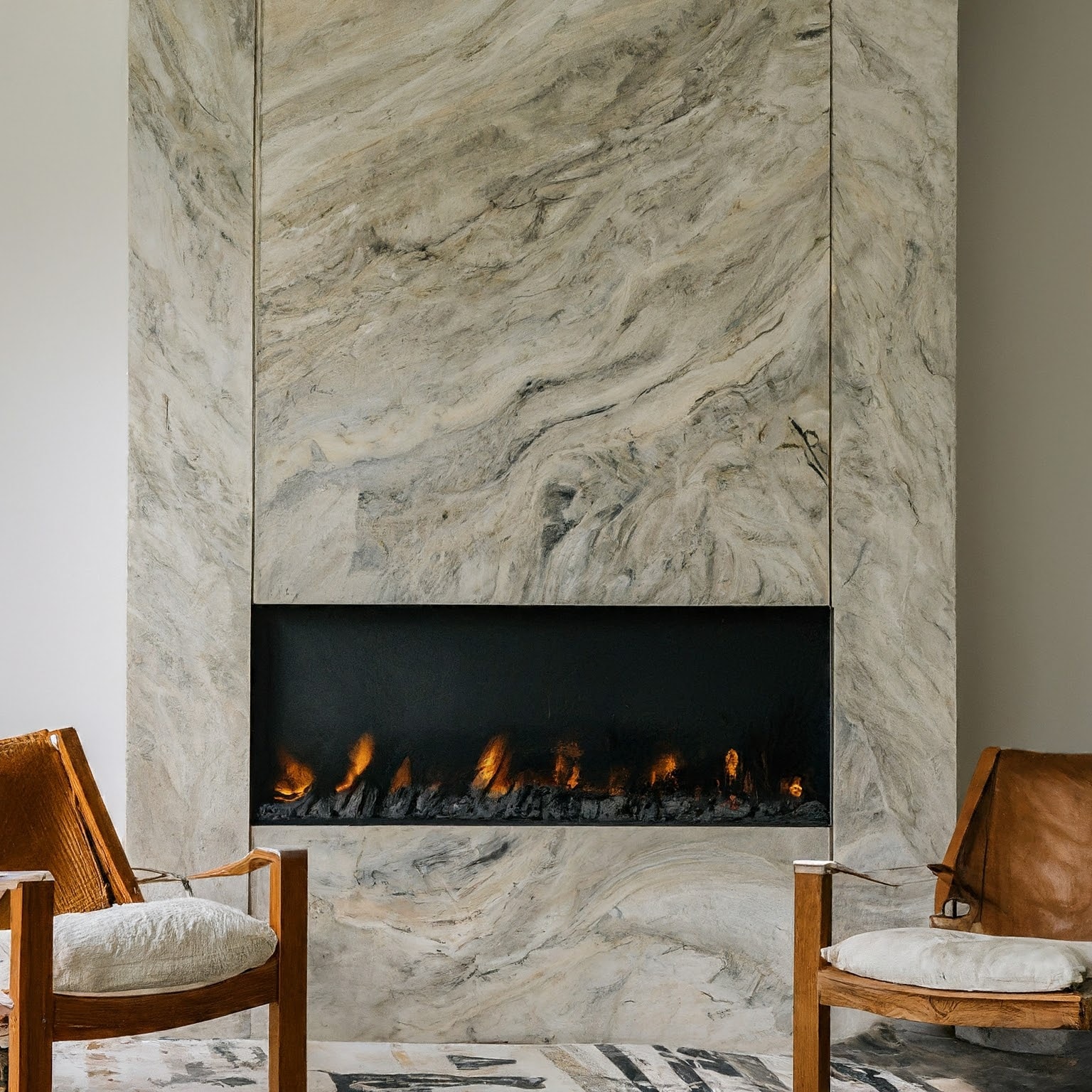
Opting for a floor-to-ceiling stone fireplace can transform a simple living space into an awe-inspiring room. This design choice makes a dramatic statement, accentuating the vertical lines of a room and giving the illusion of increased height and space.
The installation can be tailored to include functional features such as a built-in ledge, perfect for showcasing art or family memorabilia, all while remaining aesthetically pleasing.
For those seeking a more up-to-date look in their living room, a minimalist design of a floor-to-ceiling stone fireplace can be particularly compelling.
It serves as a distinctive element that transcends trends and integrates well within various architectural styles.
The popularity of using natural stone thin veneer in such installations comes down to its installation versatility and low maintenance requirements, in addition to the multitude of design options it provides.
A mantel-less stone fireplace reaching all the way to the ceiling can also convey a rustic yet streamlined aesthetic, underlining the functional artistry of the fireplace.
| Pros | Cons |
|---|---|
| Enhances room height/spaciousness | Requires significant wall space |
| Modern aesthetic with ledge | May have higher installation costs |
| Timeless design | |
| Easy install with thin veneer | |
| Versatile across styles |
Cottage-Style Fireplaces
Cottage-style living is synonymous with comfort and rustic charm, and stone fireplaces are a quintessential element that fosters this sentiment.
They frequently employ rustic stone materials to highlight the snug, inviting atmosphere typical of cottages.
An existing brick fireplace can be enhanced using stone veneer, offering a lightweight and visually appealing alternative to natural stone that rejuvenates the look of outdated brick fireplaces.
When accompanied by a reclaimed wood mantel, for instance, an older-looking stone fireplace can exude significant character and act as a natural focal point within the space.
The color tones of the stone and decor are critical in crafting the welcoming ambiance characteristic of cottage-style environments.
Creating a design that uses warm stone hues and soft lighting can help ensure that the fireplace area is perceived as a cozy retreat.
Additionally, featuring natural stone ties the indoor space to the natural world outside, enriching the traditional cottage appeal.
Whether designed for a simplistic look or something more bespoke, a cottage-style stone fireplace is a central feature that harmoniously blends elements of rustic living with the comforts of home.
Here’s a quick glance at the key aspects of cottage-style fireplaces:
- Material: Rustic stone, natural stone, reclaimed wood
- Tone: Warm, welcoming color palettes
- Connection: Incorporates elements of the outdoors
- Focus: Serves as a natural focal point in the room design
- Atmosphere: Enhances the cozy and traditional cottage ambiance
The Versatility of Stone Veneer
Stone veneer comes in a wide range of colors, textures, and sizes, allowing homeowners to perfectly match it to their living space design, whether they’re aiming for a rustic fireplace or a sleek addition to their modern living room.
This versatility makes it an ideal material for interior stone veneer fireplaces within diverse home styles – from traditional settings that invoke a rustic living feel to more contemporary.
Thanks to the lightweight, yet durable nature of stone veneer, it’s possible to install this material on nearly any wall, including those that create an eye-catching stone wall fireplace within your home.
The seamless integration it facilitates keeps your living room design cohesive while serving as a focal point.
Homeowners can opt for various installation styles. Mortar-jointed stone veneers offer a classic look with distinct mortar joints, while the dry-stack method yields a more seamless finish, free of visible mortaring between stones.
The table below summarizes the stone veneer fireplace options available:
| Stone Veneer Style | Appearance | Installation Type |
|---|---|---|
| Mortar-jointed | Classic with visible joints | Traditional |
| Dry-stack | Seamless and modern-looking | Contemporary |
Expert Tips for Designing Stone Fireplaces
Designing a stone fireplace can be a transformative project for any living space, highlighting natural beauty while providing functional warmth.
Incorporating real stones into fireplace designs allows for an impressive range of styles, ensuring personalization tailored to individual tastes and interiors.
Applications like drystack or mortarless stone placements yield a seamless and elegant look that can fit both traditional and ultra-modern decor.
These designs can use convenient panel systems or opt for bespoke handcrafted masonry to make a distinctive statement.
Selecting the appropriate stone type becomes imperative as different stones such as slate, limestone, or granite, not only dictate the overall appearance but are also pivotal for their practical qualities like durability and heat resistance.
Additionally, stone veneer fireplaces provide a versatile cladding option that matches the existing style of a home while allowing for contemporary design innovations.
To ensure that the fireplace doesn’t stand out awkwardly, integrating it with the overall interior décor is essential.
This integration guarantees that the fireplace will serve as an elegant accent, enhancing rather than detracting from the room’s visual harmony.
Combining Stone Textures and Shapes
The aesthetic appeal of a fireplace can be dramatically influenced by the choice of natural stone veneer — its color, shape, and the method of installation.
For a contemporary look, stacked stone designs are prevalent, creating a clean, minimalistic façade with stones closely fitted together, presenting minimal visible joints.
The sophistication of these stone veneers elevates the design without overwhelming the space.
A variety of stone shapes, like the linear lines of ledgestone or the square and rectangular cuts of ashlar, can be mixed and even highlighted with unstructured mosaic pieces to introduce visual interest.
In contrast, rustic stone fireplaces may embrace the charm of round fieldstones, lending an authentic, historical texture that resonates with the natural environment and a bygone era.
Furthermore, the use of interlocking stacked stone panels not only provides a smooth, consistent appearance but also simplifies the installation process by minimizing visible seams, allowing the inherent elegance of the stone to take center stage.
Choosing the Right Color Palette
Sometimes, the perfect color choice for a stone fireplace flows organically from the existing decor in a space.
Modern settings may benefit from the warmth of golden honey-toned stones, while rustic-themed rooms may find their match in various shades of gray stone.
On the other end of the spectrum, polished stones like marble or granite in sleek black or white hues can stand as focal points in traditional and contemporary designs alike.
Antique fireplaces can be beautifully complemented with vintage tools and accessories, embracing a palette that matches the patina and charm of old-world styles.
Similarly, stone veneers offer an extensive selection of colors, textures, and sizes, opening up a realm of creative design opportunities to accommodate any desired style, from gracefully rustic to strikingly modern.
In modern decor, polished stones and plank-style panels introduce a sleek, updated look. Conversely, rough-hewn, chiselled stones can enhance the rugged, hearty feel of a more rustic theme.
The chosen color palette not only unifies the fireplace with the room but also accentuates the chosen aesthetic, be it a soothing, understated environment or a bold statement area.
Understanding Joint Styles
The meticulous selection of the joint style used in the installation of a stone fireplace plays an essential role in defining the finished look.
Homeowners, designers, and builders can choose between various joint techniques, such as dry-laid, standard grout, and wide joints, to achieve a specific aesthetic.
The choice directly impacts not only the visual appeal of the fireplace but can also influence the ambiance of the entire living space.
Dry-laid mortar joints render stones to appear as if they are seamlessly touching, offering a clean, almost invisible joint with negligible gaps.
On the other hand, wide grout joints, measuring typically about 1 inch, exude a rustic vibe often sought after in country homes or rustic living spaces. The standard joint technique sits between these two extremes, providing a balanced appearance.
The mortar color and the pointing process also play pivotal roles in the final presentation of the fireplace, making these choices just as critical as the stone type.
For stone veneer applications, uniformity in joint spacing and execution ensures a sophisticated, cohesive stone wall fireplace. Below is a further exploration of these joint styles and their unique contributions to the aesthetics and functionality of stone fireplaces.
Dry-Laid Joints
In a dry-laid joint setting, mortar is applied in such a way that the joints are barely noticeable, creating a sleek and modern look attractive in contemporary living spaces.
Known for their paper-thin seam, this joint style demands precise craftsmanship to chisel and shape each stone so that it fits snugly against its neighbors.
Although this method may incur higher installation costs due to the increased labor and the need for precise stone cuts, the resulting stacked stone fireplace exudes a streamlined and elegant quality that many find appealing.
To mitigate the potential excess of stone waste, it is advisable to order more material than the exact measurements might suggest.
Additionally, recessed mortar joints can be incorporated to add depth to the stone facade, endowing it with a shadow effect that accentuates the natural beauty of the stone.
The key to a stunning dry-laid joint fireplace is consistency in joint application, which assures the attainment of the desired aesthetic outcome.
Wide Grout Joints
Wide grout joints, or 1-inch joints, are examples of the adaptation of traditional stone-laying techniques to modern living spaces.
Evoking a quintessentially rustic atmosphere, these joints infuse a casual charm into a stone fireplace wall. Wide joints decrease the need for precise stone cuts, thereby reducing material waste and streamlining the construction process.
These wider joints are compatible with a brushed finish, where the mortar is intentionally brushed over parts of the stone veneer to introduce additional texture and character to the surface.
Wide joints allow a broader range of stone shapes and sizes to be used, providing a more artisanal and natural look.
Favored for their versatility, these joints are suitable for both interior and outdoor stone fireplace applications, underscoring the sense of ruggedness and relaxation that is characteristic of natural stone fireplaces.
Mortar Joint Techniques
Mortar-jointed stone veneer applications can capture the quaint essence of a cottage while conjuring feelings of warmth and nostalgia within a living space.
Wide grout joints in mortar-jointed stone veneers lend themselves to a more rustic and robust design, often associated with large fireplaces and pastoral settings.
Moreover, the efficient use of resources is an advantage, as less stone wastage occurs when compared to tighter joint options.
The choice between sticking with mortar-jointed or opting for dry-stacked stone veneers is pivotal in defining the living room design.
For instance, the addition of a wooden mantel in combination with a mortar-jointed stone fireplace can amplify the room’s elegance while imparting a perception of increased space.
It is crucial to weave the look of the mortar joints harmoniously with the choice of stone veneer style to realize the envisioned ambiance and achieve the perfect balance for the focal point of the room.
Stylish Stone Fireplace Ideas
Fireplaces remain a desirable feature in homes, serving both as a source of warmth and a design centerpiece.
The versatility of natural stone means there are almost endless ways to style a stone fireplace, with options like slate, limestone, granite, marble, flagstone, river rock, and soapstone each offering different textures and hues.
Luxurious marble can add opulence, while the rugged look of river rock suits a more earthy decor. Stone veneers offer further diversity, emulating the appearance of natural stones while providing the flexibility of a wide range of finishes and the practicality of easier installation.
Dry stack stone applications create a clean, contemporary feel, ideal for modern design aesthetics, which forego mortar for a seamless stone appearance.
Conversely, using a mortar joint can introduce a rustic or traditional look, depending on the stone type and layout pattern used. Outdoors, stone fireplaces serve as commanding attractions, elevating patios and backyards into elegant extensions of the home’s living space.
Here are some stone fireplace design categories to consider:
Rustic Designs
Rustic stone fireplaces draw inspiration from nature with their unrefined beauty. The use of chunky, chiselled stones in random arrangements can evoke a sense of the great outdoors inside your home.
Techniques such as dry-laid, standard, or wide joint mortar affect the final look, with the choice of mortar color further influencing the design.
A modern rustic living room aesthetic, characterized by warm, natural materials and cozy elements, often features stone fireplaces, wooden beams, and comfortable furnishings to create a welcoming atmosphere.
Contemporary Styles
Contemporary stone fireplace designs can straddle the spectrum from minimalist marble to industrial-inspired slate and everything in-between.
The use of varied colors and textures in stone can accentuate an area, complementing either avant-garde or conventional decor. Natural stone veneer is crucial for achieving a sleek look that’s also versatile enough for eclectic arrangements.
With new features like electric stone cladding fireplaces, the fusion of function and style has never been more seamless.
Mixed materials, such as stone with glass, help to maintain a bright, open feel within contemporary living spaces, bridging the gap between traditional charm and modern sophistication.
Elegant Fireplaces
Elegant fireplaces exude a sense of sophistication and timeless beauty. The application of natural stone thin veneer contemporizes this classic feature, making it a lighter and more adaptable option.
Texture and color variety in stone veneer enhance the richness of a fireplace, while maintaining easy installation and upkeep.
Natural stone fireplace designs are an essential aspect of home interior aesthetics, serving as focal points in living spaces and offering both aesthetic and structural benefits.
The Benefits of a Stone Fireplace Wall
A stone wall fireplace is not just a source of physical warmth; it also contributes significantly to creating a warm, inviting ambiance in any room.
As a powerful transformational element, the natural stone veneer turns a plain wall into an exquisite feature of various living spaces.
These fireplaces are incredibly versatile and can be customized to include electric installations, offering a blend of traditional charm and modern functionality.
One of the inherent benefits of natural stone fireplaces is their heat retention capability. Compared to other materials, natural stone holds heat for a longer period, keeping the environment cozy long after the fire has dimmed.
This unique attribute can contribute to more efficient heating and enhance the comfort of the space.
Adding Warmth and Ambiance
Stone fireplaces insert a compelling warmth and character into living spaces, acting as a natural focal point and encouraging conviviality amongst family and friends.
The range of stone types available—each with its unique texture, pattern, and color—like cobblestone, limestone, and slate, enables homeowners to introduce various design aesthetics into the living space.
For those looking for durability combined with beauty, natural stone veneer stands out as a material that promises longevity and ease of care without compromising on looks.
One of the captivating design choices is a floor-to-ceiling stone fireplace, which infuses a living room with a rugged yet elegant appeal. It balances modern and rustic without overwhelming the other design elements.
And for those interested in introducing color, options like a bluestone fireplace can add visual interest and understated elegance, elevating the space’s ambiance.
Installation and Maintenance
Installing a stone fireplace requires careful planning and execution to ensure it is both safe and aesthetically pleasing. Here are some tips to consider:
- Choose the Right Material: Select a stone that is suitable for your climate and living space. Consider factors such as durability, heat resistance, and maintenance requirements. Natural stone and stone veneer are popular choices due to their aesthetic appeal and practical benefits.
- Plan the Design: Consider the style and design of your living space and choose a stone fireplace that complements it. Whether you prefer a rustic, modern, or traditional look, the design should harmonize with the overall decor of the room.
- Hire a Professional: Installation of a stone fireplace requires specialized skills and equipment. Hiring a professional like veritas stone ensures that the fireplace is installed safely and correctly, preventing potential issues down the line. A professional can also provide valuable advice on design and material selection.
- Maintain the Fireplace: Regular maintenance is essential to ensure the longevity of your stone fireplace. Clean the fireplace regularly to remove soot and debris, and inspect it for any damage or wear. Address any issues promptly to prevent further deterioration. Sealing the stone can also help protect it from stains and moisture.
Conclusion
A stone fireplace is a beautiful and functional addition to any living space, offering warmth, coziness, and style.
Whether you choose a natural stone, stone veneer, or brick fireplace, it is essential to consider the style and design of your living space and select a material that complements it.
With proper installation and maintenance, a stone fireplace can provide years of enjoyment and become a cherished focal point in your home. Embrace the timeless appeal of stone fireplaces and transform your living space into a haven of comfort and elegance.


